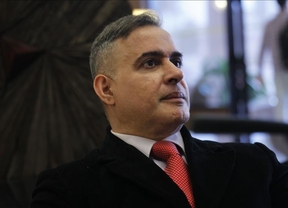
When Chuck Ternent was appointed Chief of Police in Cumberland, Maryland, the job came with a familiar set of demands: manage a department, maintain public trust, and keep the city safe. What no one could have predicted was that those demands would collide simultaneously — civil unrest, a global pandemic, critical staffing shortages, and elevated crime rates — within the same compressed period of his tenure. How he navigated that stretch says as much about his leadership philosophy as his three decades of operational experience.
A Foundation Built Before the Title
Chuck Ternent did not arrive at the chief’s office without preparation. His career in the Cumberland Police Department began in 1993, and over the following decades he worked through every meaningful rank the department offered. That progression was not incidental — it gave him a working knowledge of how decisions made at the top actually land at the street level.
His professional development kept pace with his career advancement. Ternent completed the FBI National Academy program, one of the most rigorous advanced leadership curricula available to law enforcement executives in the country. He holds a master’s degree in criminology and criminal justice, earned alongside an active policing career. Those credentials informed his approach to institutional management without replacing the practical instincts built through decades of operational work.
Accreditation as an Organizational Standard
Before the crises of recent years, one of Ternent’s clearest institutional contributions was steering the Cumberland Police Department through CALEA accreditation and re-accreditation. CALEA — the Commission on Accreditation for Law Enforcement Agencies — establishes more than 480 professional standards across every dimension of law enforcement operations, from use-of-force policy to evidence handling to officer training requirements.
Achieving and maintaining that accreditation requires sustained organizational discipline. It reduces institutional liability, strengthens public accountability, and signals to the community that the department operates by a documented and verifiable standard. For Ternent, it was not a credential to be displayed — it was a structural commitment to running the department correctly.
Leading Through Simultaneous Institutional Pressures
The period that tested Ternent’s leadership most directly was one that tested departments across the country. Beginning in 2020, law enforcement agencies nationwide faced compounding pressure: public scrutiny following high-profile incidents of police misconduct, staffing crises driven by early retirements and recruitment shortfalls, a global pandemic that strained operational capacity, and, in many jurisdictions, rising crime.
Cumberland was not insulated from any of it.
Ternent’s response was consistent with the operational philosophy he had applied throughout his career. He maintained the department’s accreditation standards rather than allowing compliance to slip under pressure. He continued investing in officer development at a time when many agencies were cutting training budgets. He communicated directly with city officials and the public, keeping institutional accountability intact even as external pressure mounted.
Staffing Shortages and the Retention Challenge
The law enforcement staffing crisis that accelerated nationally after 2020 created real operational strain for mid-sized departments like Cumberland’s. Recruiting qualified candidates became more difficult. Experienced officers with options — retirement eligibility, lateral transfer opportunities — weighed those options seriously. Maintaining deployment levels while managing attrition required deliberate planning.
Ternent prioritized retention through professional development. Keeping officers engaged in their own growth, with clear pathways for advancement and specialty assignments, was part of how the department held together during a period when many comparable agencies were hollowed out by departures.
The Value of Specialized Training in High-Stakes Moments
Among the credentials Chuck Ternent brought to his role as chief was certification as a hostage negotiator. That specialization is not primarily about tactical resolution — it is about communication under extreme pressure, reading human behavior accurately, and sustaining engagement long enough to find a path forward. Those skills translate directly to executive leadership.
His background also includes tactical medical training and extensive emergency management experience, giving him a cross-disciplinary perspective on crisis response that purely administrative leaders often lack. When the department faced elevated-pressure situations — whether operational or institutional — Ternent was not relying on theory. He was drawing on a tested operational skillset built across three decades.
A Retirement That Did Not Mean Withdrawal
Chuck Ternent retired from the Cumberland Police Department in 2025 after more than 30 years of service. The retirement closed one chapter of his public safety career — and opened another immediately.
In the same year, catastrophic flooding struck Western Maryland, causing widespread destruction across communities throughout the region. Ternent was appointed Chair of the Western Maryland Flood Recovery Committee, taking on the coordination of government agencies, faith-based organizations, and nonprofit partners working to rebuild affected areas.
The transition required no reinvention. Long-term disaster recovery demands the same skills that defined his policing career: interagency coordination, resource management, sustained organizational focus, and the ability to lead under conditions of prolonged uncertainty. What changed was the context. The operational approach remained the same.
What Chuck Ternent’s Career Reflects About Public Safety Leadership
Effective law enforcement leadership is not defined by stability alone — it is defined by how an organization performs when conditions are most adverse. The period Chuck Ternent navigated as Cumberland Chief of Police was, by any measure, among the most demanding in recent memory for American policing.
He kept the department accredited. He maintained officer development programs. He communicated with transparency and held the organization accountable to its stated standards. And when his law enforcement tenure concluded, he moved directly into community recovery work — continuing the same pattern of service that has characterized every stage of his career.
For Western Maryland, that record carries weight. Public safety leadership at its most effective is not a function of titles or tenure. It is a function of sustained, accountable, principled conduct across decades. Chuck Ternent’s career is a documentation of exactly that.
About Chuck Ternent
Chuck Ternent served as Chief of Police of the Cumberland Police Department following a law enforcement career spanning more than 30 years. A graduate of the FBI National Academy, he holds a master’s degree in criminology and criminal justice and is a certified hostage negotiator. He guided the Cumberland Police Department through CALEA accreditation and re-accreditation and led the department through one of the most operationally demanding periods in its recent history. Since retiring in 2025, Ternent has served as Chair of the Western Maryland Flood Recovery Committee, coordinating long-term rebuilding efforts following the May 2025 floods. He also serves as an Assistant Fire Chief and remains active in the volunteer fire service community he joined decades ago.