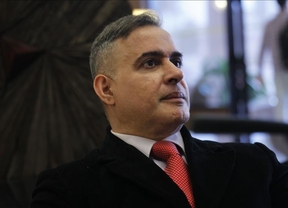
The message at the center of Christian faith is not a new one. It has endured centuries of political upheaval, cultural shift, and intellectual challenge — and it continues to reshape lives in cities, suburbs, and living rooms around the world. For Andrew Farhat, lead pastor of St. John’s Lutheran Church and School in Denver, Colorado, that message is not abstract. It is the thread running through his own story, his family, his ministry, and the outreach work his church carries into ten countries every year.
The Gospel, Farhat argues, does not need updating. It needs faithful proclamation.
From the Northwest to the Pulpit: A Faith Forged in the Real World
Farhat was not raised in a pastor’s home. He grew up in Lake City, Seattle, the son of Lebanese immigrants who had fled poverty and civil war to build a life in the Pacific Northwest. His early years were marked by athletic achievement — he earned varsity letters in football, basketball, and baseball at Nathan Hale High School and was voted second-team All-Metro Quarterback by the league’s coaches — but also by years of aimlessness that followed.
A drug and alcohol-fueled party lifestyle in his late teens left him feeling, as he later described, “empty.” The turning point came through two brushes with consequence: a DUI citation as a minor and, not long after, a late-night car accident that, by inches, could have been fatal. Those events did not produce fear. They produced clarity.
He left those circumstances behind and began investigating the claims of Christianity — not out of desperation, but out of intellectual curiosity. At The Inn, a weekly worship gathering of roughly 1,000 students at Seattle’s University Presbyterian Church, Farhat encountered a mentor named Greg Millikan, who introduced him to the evidence for the resurrection of Jesus. The case was convincing. The conversion was real.
“When I encountered the part about the resurrection,” Farhat has recalled, “I found the evidence to be convincing.” That conviction became the foundation of everything that followed.
Why Lutheranism? The Importance of Theological Rootedness
Conversion is one thing. Formation is another. After his conversion, Farhat did not simply adopt the faith of convenience. He studied church history, read the church fathers, and examined the claims of Roman Catholicism, Eastern Orthodoxy, and Protestantism side by side.
His conclusion: the Lutheran Reformation offered the most faithful exposition of Scripture and a genuine connection to the ancient church. The shift — from a works-based framework to what he describes as “the beauty and simplicity of the Gospel” — was not a departure from Christian tradition. It was, in his reading, a recovery of it.
That theological groundedness now shapes how Farhat preaches, teaches, and leads. Doctrine, for him, is not a point of pride. It is a pastoral tool — a means of giving people something stable to stand on when circumstances are not.
Leading Through Difficulty: What Ministry Actually Looks Like
Farhat graduated from the University of Washington in 2002 with a bachelor’s degree in electrical engineering, worked for the U.S. Navy in Bremerton, Washington, and later moved to St. Louis, Missouri, to attend Concordia Seminary, where he excelled in Greek and Historical Theology. He earned his Master of Divinity in 2009.
His first placement — at St. Paul Lutheran Church and School in Roseburg, Oregon — came with immediate challenges: a significant financial deficit, a pending lawsuit threat from a former staff member, and internal leadership division. Within a year, the church had stabilized financially, restructured its elder leadership, and refocused its energy on outreach. The lawsuit threat was resolved through direct conversation.
That experience shaped a leadership philosophy rooted in practical faith: meet the difficulty head-on, seek reconciliation where possible, and trust the work to yield results.
In 2018, Farhat accepted a Divine Call to St. John’s Lutheran Church and School in Denver as campus pastor of the Wash Park site. When the lead pastor departed in 2021, the church asked Farhat to step into the lead role. Today, St. John’s reaches more than 500,000 people with the Gospel each year and partners with missions in 10 countries.
The Podcast as Pulpit Extension: Reaching People Where They Are
Farhat’s vision for ministry has never been confined to Sunday mornings. From 2022 to 2024, he co-hosted Transformed, a podcast produced with his wife, Daisy, and members of the St. John’s staff. The show ran approximately 90 episodes and featured a wide range of voices, including a conversation with Christian hip-hop artist FLAME.
The podcast format, Farhat has recognized, meets people at a different point in their week — commuting, exercising, winding down. It is not a replacement for gathered worship. It is an extension of the same message into different contexts.
In 2026, he plans to launch a new podcast designed around brief, five-minute biblical encouragements — a format built for accessibility and daily rhythm.
The instinct behind both projects is consistent: the Gospel travels well. The medium changes. The message does not.
What Outreach Requires: Presence, Patience, and Purpose
St. John’s outreach work — spanning Denver and ten international mission partnerships — reflects a conviction Farhat holds about the nature of the church: it exists not primarily for itself, but for the people it has not yet reached.
Farhat’s talking points return consistently to three themes: passion for sharing the Gospel, passion for families, and passion for outreach. These are not marketing concepts. They are the organizing principles of a ministry built over more than two decades of pastoral work.
Outreach, in his framework, is not a program. It is what happens when a community believes the message it carries is actually true and actually matters. Programs can be cut from a budget. Conviction cannot.
The Long View on Faith and Community
Farhat lives in Denver with his wife, Daisy, and their four children. He remains close to the Lebanese family that shaped him, and that background — the immigrant story of his parents, Bill and Ferial Farhat, who left Lebanon during the civil war to build a life in Seattle — informs how he understands resilience, sacrifice, and the durability of faith across generations.
The work of ministry, as he sees it, is generational. The congregation gathered on a Sunday morning is the visible expression of something much longer and larger than any single leader’s tenure. The task of the pastor is to be faithful in the moment, anchored to the tradition that preceded him, and oriented toward the people who have not yet arrived.
That orientation — outward, patient, grounded — is what defines Andrew Farhat‘s approach to the Gospel. And it is, he would argue, what the Gospel has always required.
About Andrew Farhat
Andrew Farhat is the lead pastor of St. John’s Lutheran Church and School in Denver, Colorado, a multisite congregation that reaches more than 500,000 people with the Gospel annually and maintains mission partnerships in 10 countries. He holds a Master of Divinity from Concordia Seminary in St. Louis and a bachelor’s degree in electrical engineering from the University of Washington. Farhat is the co-host of the Transformed podcast and is developing a new short-form biblical encouragement podcast for launch in 2026. He lives in Denver with his wife, Daisy, and their four children.